Planning and receiving your inspection
What will it cost, and when will I receive the report?
Ken confirms the inspection scope, pricing, approved travel or extras and any retainer before you accept. A required retainer is credited toward the final invoice and must be received before travel or attendance. Review the current agreement and your project-specific quote for the authorized amount.
Confirm the reporting schedule for your assignment, including any laboratory work or additional investigation. Report release requires full payment; a fixed turnaround is not promised for every project.
Who receives my DSi report?
Identify the intended recipients in your assignment. Under the agreement, you may share the complete report for this property and related professional advice without misrepresenting the findings. Discuss distribution before work begins; authorized providers and legally required disclosures are addressed in the agreement.
How do I get started?
Have the property address, loss date, current restoration stage, desired deadline and the questions you need answered ready. Submit an inspection inquiry or call Ken at 817-542-1189. Discuss secure document transfer before sending project records.
Ken reviews the request and confirms scope, fees and availability. The client signs the prepared agreement, DSi countersigns, and the appointment is coordinated subject to any required retainer. An inquiry alone does not book an inspection.
Independent evidence and other experts
Why consider an independent inspection?
A water loss brings together parties with different financial interests. Those interests can influence how scope and cost are discussed:
- The insurer and its adjuster: the insurer has a financial interest in controlling claim costs, and its adjuster evaluates the loss on the insurer’s behalf.
- The contractor: the contractor is paid for the work and has a financial interest in the scope and price of its services.
- The policyholder: the owner has a financial stake in the property and the claim outcome, and may need qualified help understanding technical proposals and insurance questions.
Those interests do not, by themselves, establish what the structure needs. A technically supported repair scope requires evidence about the actual condition of the property.
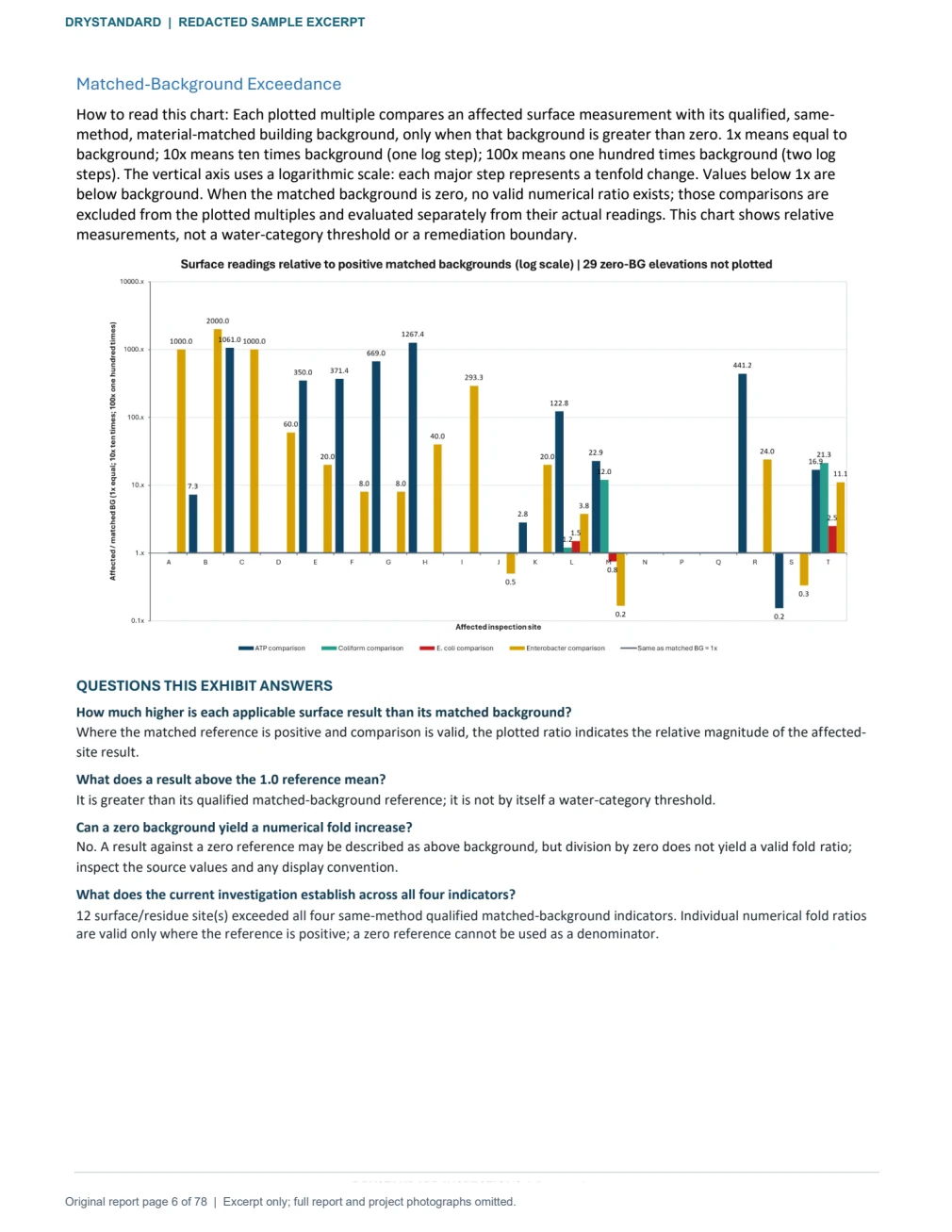
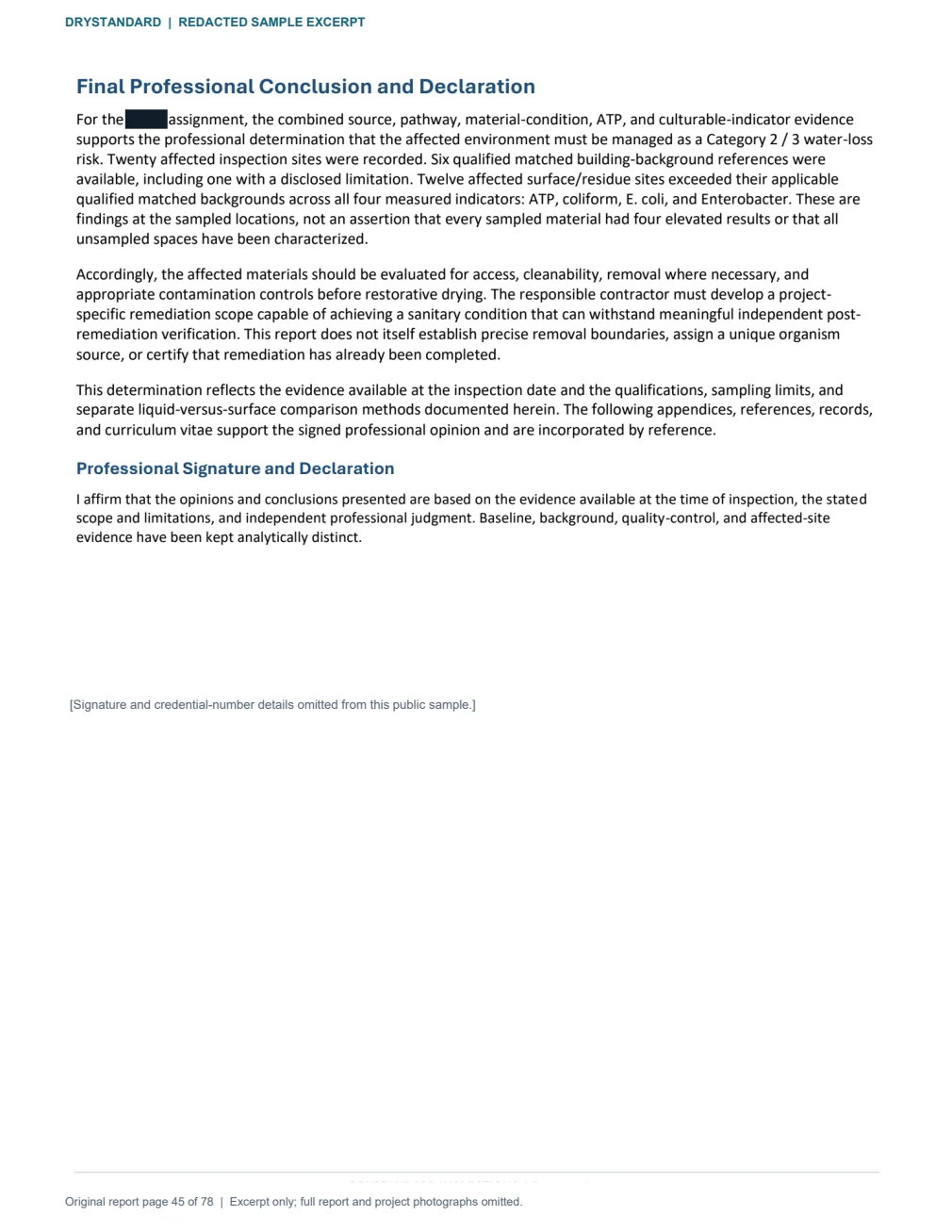
DSi’s value is an independent technical opinion grounded in that evidence. We document the degree of water contamination and explain its implications for affected materials, removal, cavity access and decontamination. Our findings follow the evidence, regardless of who engages or pays us or which conclusion a party would prefer.
Independence must be supported by the way the work is performed. Before accepting an assignment, we review its scope and potential conflicts. Our report explains the observations, methods, reasoning and limitations so others can examine the basis for the conclusions. The inspection does not decide policy coverage or promise a particular claim settlement.
“We speak for the structure—for it has no voice.”
My claims representative says an inspection is unnecessary. What should I ask?
Ask what observations, measurements and technical reasoning support the proposed restoration scope. Identify the specific unanswered question you want DSi to investigate. A disagreement about coverage and a disagreement about the condition of the structure are different issues.
If reimbursement for an inspection is declined, ask for the explanation in writing and the policy provisions relied upon. An absence of a named exclusion, by itself, is not a promise that a particular expense will be paid.
The insurer is sending a consultant. What should I check?
The insurer may arrange an inspection under the applicable policy terms. That does not, by itself, establish the qualifications of the person attending or the technical basis of a conclusion. Ask these questions in writing:
- Who will inspect and who will write the opinion? Request the name, employer, role and current résumé or curriculum vitae (CV) of the actual inspector and the professional responsible for the report. Ask about experience relevant to this property, damage and proposed testing. Verify any applicable professional licence with the issuing regulator.
- Is the person attending the person identified? Confirm the attendees in advance. On arrival, ask to see company or government-issued photo identification, such as a driver’s licence, to match the visitor to the named inspector. If a technician or assistant attends, clarify their qualifications, work and supervision. Identification establishes identity; the CV and relevant experience address competence.
- What is the assignment and who engaged them? Clarify the questions, methods, inspection scope and any limits on the work. Ask about ongoing work for the insurer and any financial interest in later repairs. Those relationships are relevant to independence and should be considered alongside the quality of the evidence and reasoning.
- Will you receive the findings? Request a complete copy of the final report, including its attachments and addenda, and the photographs, measurements and laboratory findings relied upon in the claim decision. Ask the insurer to identify which conclusions it adopted and how they affected its decision.
If information is withheld, request the reason and the policy or legal basis in writing. Discuss unresolved disclosure or qualification concerns with an appropriately licensed claims representative, attorney or your insurance regulator. Access to particular records can depend on the policy and applicable law.
You can seek a qualified independent opinion of your own choosing. A separate water-category inspection can establish evidence about contamination and the technical repair scope. Agree on qualifications, conflicts, scope and fees before engaging the professional. Hiring your own expert does not automatically require the insurer to accept that opinion, reimburse the fee or replace its own inspection.
Coordinate legitimate inspections consistently with your policy obligations. Keep requests for credentials and reports separate from required property access; obtain advice before withholding access. Apply the same qualification and independence questions to DSi.
Payment and insurance reimbursement
Can DSi bill my insurer or wait for my claim settlement?
Under our current Water Inspection Service Agreement, the client is responsible for DSi's fees. Do not assume that giving us a claim number transfers that responsibility to the insurer or postpones payment.
The agreement does not assign insurance benefits or create a letter of protection. Full payment for the inspection, report and authorized related charges must be received before the report is released, even if your claim remains unresolved.
Can I pay DSi and request reimbursement?
You may submit the accurately itemized invoice, proof of payment and supporting report to your insurer for consideration. Keep copies and ask what supporting records are needed. If you intend to seek reimbursement, request the insurer’s position on the proposed scope and expense classification before incurring the fee where practical.
Whether a particular charge is covered, and how it affects available limits, depends on the actual policy, endorsements, loss circumstances and applicable rules. A receipt or a claim-preparation label does not guarantee payment. Confirm DSi’s payment arrangements before authorizing work.
Does my policy provide for outside experts?
Review the policy’s loss-documentation duties, investigation provisions and any professional-fee or claim-preparation coverage. Ask your insurer to identify the provisions that apply to a qualified expert evaluating the contamination question or technical repair scope.
The need to document a loss supports gathering relevant evidence. It does not, by itself, mean every policy requires water-category testing or promises payment for a policyholder’s chosen expert. Confirm the applicable terms, any approval requirement and the expense treatment for the proposed assignment in writing.
Can water-category testing be treated as a claim-preparation expense?
Water-category testing and reporting establish evidence to help define the repair scope. They do not themselves decontaminate, dry or repair the structure. The report explains what the findings support about material removal, access and decontamination within the agreed assignment.
Ask your insurer whether your policy covers this proposed work under claim-preparation expenses, professional fees, loss-data preparation or another applicable provision. Request a written answer identifying any prior-approval requirement, deductible, sublimit, exclusion and the qualifications required of the provider.
Separate the two kinds of expense: the insurer’s cost of investigating and adjusting its claim is different from your cost of hiring an expert to document the property. The insurer’s accounting treatment does not automatically determine reimbursement for your invoice.
Itemize the testing, inspection and report accurately on their own invoice. Describing the work as claim preparation does not create coverage or override an exclusion. Flood policies, including NFIP policies, have specific exclusions and conditions; do not assume testing reimbursement.
Will inspection costs reduce the money available for repairs?
That must be determined from the applicable policy and endorsements. Do not assume claim-preparation or expert fees are payable in addition to the building limit.
Ask the insurer to confirm in writing whether an approved expense is paid under a separate additional amount of insurance or within an existing limit, and whether any separate sublimit applies. Have your agent, licensed claims representative or attorney review unclear wording before relying on that treatment.
The purpose of the report is to establish the technical evidence for the work the property needs. Your obligation to pay DSi under the agreement remains separate from the insurer’s reimbursement decision.
What if I need claim funds before I can pay?
Ask your insurer whether an advance for an undisputed portion of the claim is available and what estimates or other records it requires. Availability and timing depend on your claim. Tell Ken about any funding concern before authorizing work; do not assume DSi has agreed to extend credit.
Who helps with coverage questions or a claim dispute?
DSi's assignment is technical inspection and documentation. Our inspection agreement does not appoint us as your attorney or public adjuster.
For help with policy interpretation or a disputed claim, consider an attorney or an appropriately licensed public adjuster. A public adjuster engaged by you works on your behalf and charges a fee. Check credentials, fees and the proposed agreement before hiring. Your state insurance department can also explain consumer complaint options.